
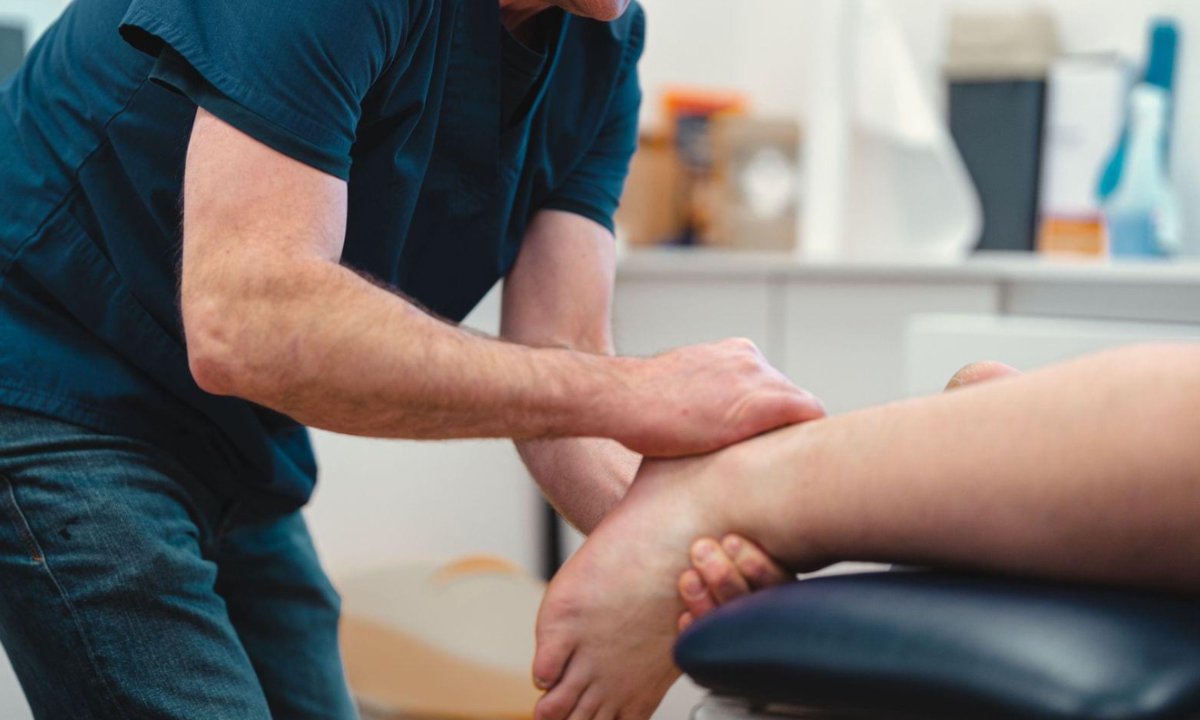
A common assumption — among patients, and sometimes elsewhere — is that an arthritic ankle is essentially a surgical problem. In some cases it is. In many others, conservative biomechanical care can make a real difference to day-to-day pain and function, even when the underlying joint changes themselves are permanent.
Here’s an example from clinic that illustrates the kind of approach worth considering.
A familiar conversation
A patient in his late seventies came in for a routine chiropody appointment for an ingrowing toenail. When asked whether anything else was bothering him footwise, the answer was one we hear regularly:
“Well, I’ve got this arthritic ankle but there’s nothing you can do about that, is there?”
There was time left in the appointment, so we had a proper look.
What we found on assessment
The right ankle was swollen, with reduced range of movement, particularly in dorsiflexion (lifting the foot up). Watching him walk in from the waiting room, the gait showed a shortened stance phase on that side and a compensating pattern through the hip. He’d been favouring it for years.
X-rays previously taken by his GP confirmed osteoarthritic changes in the ankle joint itself. Surgery — fusion or replacement — had been raised, and he’d decided he didn’t want to go down that route.
What we tried
The plan was straightforward, and it’s the kind of approach that’s worth trying before surgery becomes the only option on the table.
- A custom-adapted orthosis with a medial post and a slight rocker built in. The aim was to reduce the demand on the painful joint by offloading the medial side and giving the foot a small push through the gait cycle so the ankle had less work to do.
- A short course of joint mobilisation and soft-tissue work at the ankle and forefoot to free up the surrounding restriction that had built up over years of guarding.
- A targeted home exercise programme — calf stretches, ankle range-of-motion drills, and single-leg balance work.
- Footwear advice. A structured lace-up shoe with a slight heel-toe drop in place of the slip-ons he’d been wearing.
How it went
At review six weeks later, day-to-day pain was reduced and walking distance had improved. The joint itself hadn’t changed — it was still arthritic — but it was now more stable and many of the symptoms had reduced.
Surgery has not been needed so far. It may be in future. For now the conservative pathway has bought useful time and function.
When this approach is worth considering
Conservative care for an arthritic ankle may be worth exploring if:
- You have radiographic evidence of arthritis and would prefer to delay or avoid surgery
- Surgery has been recommended but you’d like a second opinion on what else might help
- Your symptoms are affecting walking, work or activity
- You haven’t had a structured biomechanical assessment yet
Outcomes vary case by case and the joint changes themselves don’t reverse. The right combination of orthoses, MSK and sports podiatry work and exercise can, however, make a meaningful difference to how the condition feels day to day.
Book an appointment or make an enquiry → — Leeds, York, Wetherby and Wharfedale.
Case detail anonymised. Patient name, age and identifying details adjusted.