
If shockwave therapy has been suggested for your foot or lower-limb problem — or you have already been booked in for a course — it helps to know what to expect. This guide explains what the treatment is, what it is used for, how it feels and what happens afterwards, so you can talk it through with your podiatrist and make an informed decision.
What shockwave therapy is
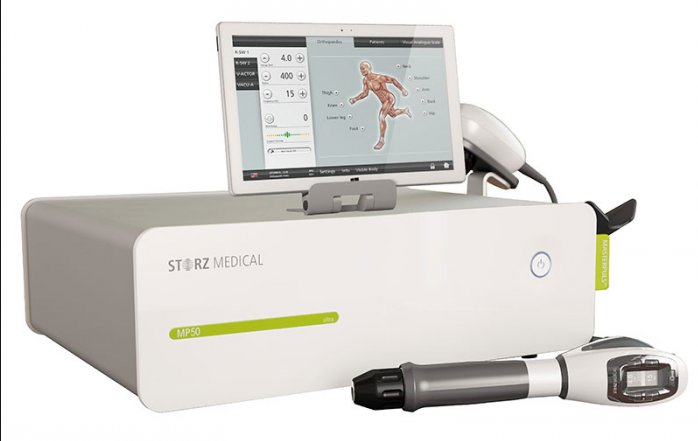
Shockwave therapy — more fully, extracorporeal shockwave therapy or ESWT — is a non-invasive treatment that delivers a series of high-energy acoustic pressure waves to an area of injured or painful tissue. A handheld applicator is placed against the skin over the affected area and the waves pass into the tissue beneath.
The aim is to stimulate the body’s own healing response in tissue that has become persistently painful or slow to recover. It involves no injection, incision or medication, and no anaesthetic is needed. We use it as one option within a wider treatment plan rather than as a stand-alone fix.
What it is commonly used for
In podiatry and lower-limb care, shockwave is most often considered for longstanding soft-tissue and tendon problems that have not settled with first-line measures such as activity modification, footwear changes, orthoses or a loading (strengthening) programme. Common examples include:
- Plantar fasciitis and persistent heel pain
- Achilles tendinopathy
- Other chronic tendon and insertional problems around the foot and lower limb
It is generally used for problems that have been present for several months rather than a recent, acute injury. Your podiatrist will assess whether it is an appropriate option for your particular diagnosis.
What the treatment feels like
During a session you will feel a rapid series of pulses over the treatment area. Most people describe it as a strong tapping or thudding sensation that can be a little uncomfortable, particularly over the most tender spot. The intensity can be adjusted and we work within a level you can tolerate. The shockwave part of the appointment is usually short — often only a few minutes — with the rest of the time given to assessment and advice.
How many sessions may be needed
Shockwave is normally delivered as a course rather than a single treatment. A typical course is around three to four sessions spaced roughly a week apart, though the exact number varies with the condition, how long it has been present and how you respond. Any improvement tends to build gradually over the weeks following the course rather than straight away, and shockwave is often combined with other measures such as orthoses, footwear advice or a structured exercise programme.
What to expect afterwards
Shockwave is a walk-in, walk-out treatment and you can usually return to your normal day straight away. Some people notice temporary soreness, redness or mild swelling in the treated area for a day or two; this is a normal response and generally settles on its own. We may suggest easing off high-impact activity for a short period and will give you aftercare guidance based on your situation. As with any treatment, responses vary from person to person and improvement cannot be guaranteed.
Who it may not be suitable for
Shockwave is not appropriate for everyone. It is generally avoided, or used only with particular caution, if you:
- are pregnant
- take blood-thinning medication, or have a bleeding or clotting disorder
- have an active infection, open wound or certain skin conditions over the treatment area
- have a known tumour or malignancy in the area to be treated
- are under 18, where growth plates are still developing
This is not a complete list, and there may be other reasons the treatment isn’t right for you. A full assessment lets us check whether shockwave is a sensible option in your case, and talk through the alternatives if it isn’t.
Speak to us about an assessment
If you would like to know whether shockwave therapy could help your foot or lower-limb pain, the first step is an assessment so we can reach a clear diagnosis and discuss the options with you. You can read more about our shockwave therapy service and our wider MSK and sports podiatry work.
Book an appointment or make an enquiry → — Leeds, York, Wetherby and Wharfedale.