
Shockwave therapy has a useful evidence base for stubborn heel pain and Achilles tendinopathy. It’s worth considering when standard care — rest, exercises, footwear changes, insoles — has helped a bit but hasn’t fully resolved the problem.
What shockwave therapy is
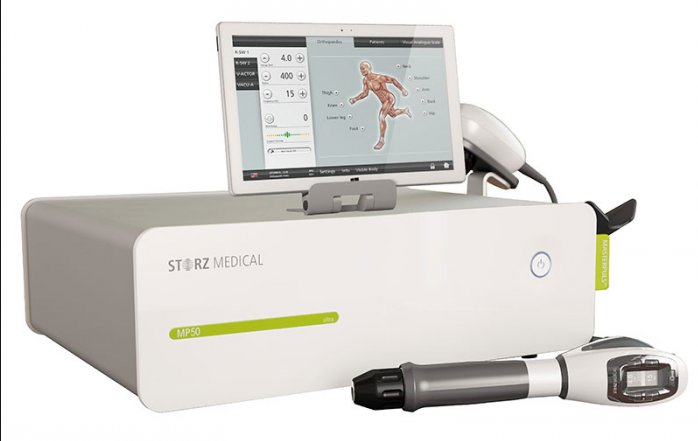
Shockwave therapy delivers acoustic pulses to the affected tissue through a hand-held probe. The pulses create a controlled mechanical stimulus that the body responds to with an increase in local blood flow and a re-triggering of the tissue’s natural repair process. Importantly, it gives the body a reason to start healing tissue that has slipped into a chronic, non-healing state — which is what tends to happen with long-standing tendon and fascial problems.
A typical course is four to six sessions, one a week, with each session lasting around 15 minutes. The treatment itself is uncomfortable while it’s being delivered but tolerable, and there’s no recovery period needed at the end of each session.
What it’s used for
We use shockwave most commonly for:
- Plantar fasciitis — the heel pain you feel under the heel, particularly first thing in the morning. Linked condition page: heel pain and plantar fasciitis.
- Achilles tendinopathy — pain and thickening through the Achilles tendon at the back of the heel.
- Patellar tendinopathy and other persistent tendinopathies of the lower limb.
The evidence base for shockwave in plantar fasciitis and insertional Achilles tendinopathy is reasonably strong. It’s not a magic wand, but in carefully selected cases it can help symptoms that have not responded to first-line care.
When it’s worth considering
Shockwave is usually considered when:
- You’ve had heel pain or Achilles symptoms for at least three months
- You’ve already tried first-line care: rest, stretching, calf strengthening, footwear changes, insoles
- The pain is significantly affecting walking, work or activity
- You’d rather try a structured non-invasive treatment course before considering injection therapy or surgery
It’s not a first-line treatment. We’ll usually do a full assessment first to make sure shockwave is the right tool, and to address any underlying biomechanical contributor at the same time. That often means combining the shockwave course with orthoses, gait analysis where relevant, and a structured loading programme through our MSK and sports podiatry service.
What an appointment looks like
The first appointment is a full assessment. We confirm the diagnosis, palpate the affected tissue to identify the treatment area, and explain the rationale and the likely number of sessions. The shockwave is then delivered through a contact probe with gel — similar in feel to an ultrasound scan but with a percussive sensation.
Between sessions you continue normal activity, with any specific loading exercises we’ve prescribed. Most patients notice a change after two or three sessions, with continued improvement after the course completes as the tissue continues to remodel.
Where it’s available
Shockwave is available at our Leeds, York, Wetherby and Wharfedale clinics — same machine, same protocol, same fee at each.
Pricing is on the fees page.
Book an appointment or make an enquiry →.
Lee Short MSc DPodM and Bob Longworth MSc DPodM are directors and senior podiatrists at Podiatry Clinics (Yorkshire) Ltd.